
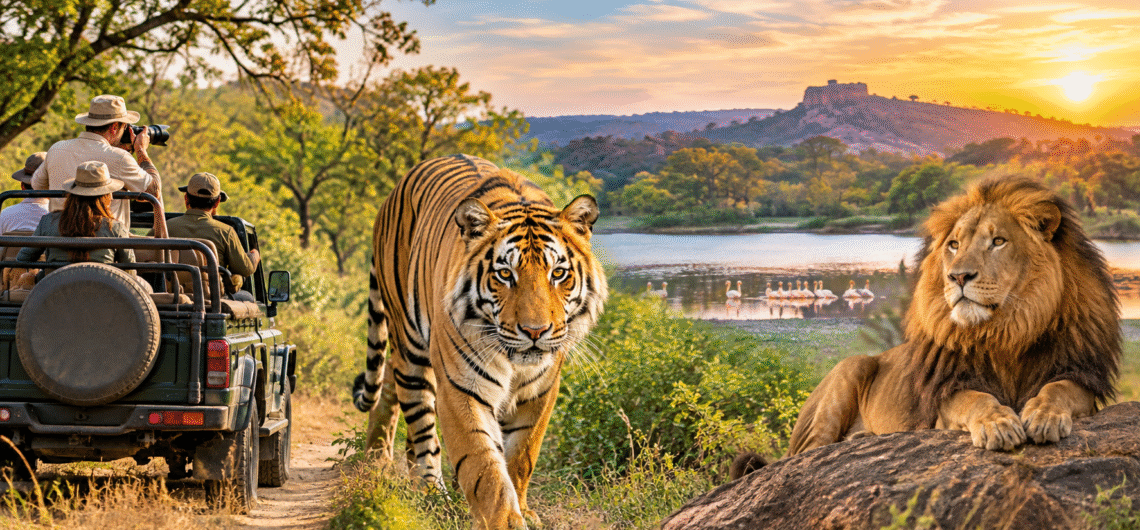
India is known for its historic monuments, colourful cities, rich culture, and beautiful landscapes. But beyond the Taj Mahal, forts, palaces, and busy streets lies another side of the country—one filled with forests, grasslands, wetlands, mountains, and incredible wildlife.
An Indian wildlife tour is an opportunity to experience this natural side of the country while exploring some of its most fascinating protected areas. From watching a Bengal tiger in the forests of Rajasthan or Madhya Pradesh to searching for the Asiatic lion in Gujarat, wildlife travel in India offers experiences that are very different from a traditional sightseeing holiday.
For travellers looking for nature, photography, adventure, and unforgettable encounters with animals in their natural habitats, Indian National Park tours can be an excellent addition to an India itinerary.
Why Choose an Indian Wildlife Tour?
India has a remarkable variety of habitats. Its wildlife areas range from the Himalayan foothills and central Indian forests to the Western Ghats, northeastern floodplains, and mangrove forests of the Sundarbans.
A wildlife trip is not only about seeing a particular animal. It is about experiencing the forest itself—the sound of birds in the morning, fresh animal tracks on a forest road, deer moving through the grass, monkeys calling from the trees, and the excitement of waiting quietly during a safari.
The country’s tiger conservation program has played an important role in protecting tiger habitats. According to the National Tiger Conservation Authority, India currently has 58 tiger reserves across 18 states.
This makes India one of the world’s most interesting destinations for travellers who want to experience wildlife responsibly.
Best Destinations for Indian National Park Tours
There are many wildlife destinations across India, and each offers a different experience. Choosing the right park depends on the animals you want to see, your travel dates, and the type of experience you prefer.
Ranthambore National Park, Rajasthan
Ranthambore is one of the best-known wildlife destinations in northern India. Located in Rajasthan, it combines wildlife with the historic atmosphere of the region.
The park is particularly popular with travellers interested in tiger sightings. A safari through its dry forests, lakes, grasslands, and ancient landscapes can provide opportunities to see tigers, leopards, sambar deer, spotted deer, crocodiles, and numerous bird species.
Ranthambore can also be conveniently combined with Jaipur and Agra, making it a natural addition to a Golden Triangle itinerary.
Jim Corbett National Park, Uttarakhand
Jim Corbett is another famous destination for wildlife enthusiasts. Located in the Himalayan foothills, the landscape includes forests, rivers, grasslands, and hills.
The area is well known for its tiger habitat, but the experience goes beyond tiger watching. Depending on the safari zone and conditions, visitors may encounter elephants, deer, birds, reptiles, and other forest species.
For travellers interested in combining nature with a northern India journey, Corbett can be a rewarding choice.
Kanha National Park, Madhya Pradesh
Kanha is one of the celebrated wildlife destinations of central India. Its forests and open meadows provide habitat for tigers, leopards, deer, gaur, and many other species.
The park is especially appealing to travellers who want a deeper forest experience rather than a quick wildlife excursion.
Kanha is also among the tiger reserves officially listed by the National Tiger Conservation Authority.
Bandhavgarh National Park, Madhya Pradesh
Bandhavgarh is another popular destination for Tiger Safari tours. Its forest landscape and wildlife-rich surroundings attract travellers and photographers from around the world.
A safari here is never completely predictable, which is part of the excitement. Wildlife sightings depend on many natural factors, including animal movement, weather, habitat conditions, and luck.
That uncertainty makes every safari different.
Gir National Park, Gujarat
For travellers interested in lions, Gir is a special destination.
Gir is the famous home of the Asiatic lion, making it one of the most distinctive wildlife destinations in India. A Lion Safari Tour in Gir provides an opportunity to explore the landscape associated with this remarkable species.
The experience is different from a tiger safari because the habitat, wildlife behaviour, and safari environment are different. Travellers can also combine their visit with Gujarat’s cultural attractions and other destinations.
Tiger Safari Tours in India
A tiger safari is often the highlight of an Indian wildlife holiday. However, responsible travellers should remember that a safari is not a guaranteed animal-viewing experience.
Tigers are wild animals, and sightings depend on nature rather than a fixed schedule.
The National Tiger Conservation Authority explains that tiger reserves are managed through core and buffer areas, with conservation and habitat protection forming an important part of the program.
During a safari, visitors may also see animals such as:
- Bengal tigers
- Leopards
- Sloth bears
- Sambar deer
- Spotted deer
- Gaur
- Wild boar
- Indian elephants
- Crocodiles
- Numerous resident and migratory birds
Even when a tiger remains hidden, the forest can still provide an unforgettable experience.
Lion Safari Tours: Experience the Asiatic Lion
A Lion Safari Tour offers a different kind of wildlife adventure.
Gir’s Asiatic lions are one of India’s most distinctive wildlife attractions. Instead of focusing only on photographs, travellers can appreciate the wider ecosystem in which lions live.
A good wildlife itinerary should leave enough time to explore the destination without rushing from one attraction to another. Combining a safari with local sightseeing, nature experiences, and cultural attractions can make the journey more meaningful.
The Adventure of Indian Wildlife
The real Adventure of Indian wildlife comes from its unpredictability.
You may begin a morning safari hoping to see a tiger but instead find yourself watching a herd of deer crossing the road. A sudden bird call may attract your attention to the trees. You might see an elephant near a water source or notice fresh pugmarks on the forest trail.
These moments are part of what makes wildlife travel different from ordinary sightseeing.
It is also important to remember that national parks are protected ecosystems, not open-air zoos. Animals should be observed from a safe distance, and visitors should follow the instructions of forest authorities, guides, and safari operators.
Responsible Wildlife Tourism in India
Wildlife tourism works best when visitors understand that conservation comes first.
The National Tiger Conservation Authority maintains tourism-related guidelines and advisories for tiger reserves, including measures concerning tourism activities and carrying capacity.
When visiting a national park, travellers should:
- Follow park and forest department rules.
- Avoid loud conversations during safaris.
- Never feed wild animals.
- Do not attempt to approach or touch wildlife.
- Avoid littering.
- Follow the designated safari routes.
- Listen to the instructions of trained guides and drivers.
- Avoid disturbing animals for photographs.
- Respect local communities and their surroundings.
Responsible tourism helps protect the places that travellers come to experience.
When Should You Plan a Wildlife Tour?
The ideal travel period depends on the national park and the type of experience you want.
Many wildlife destinations have seasonal opening and closing schedules, and safari availability can also vary. Weather conditions can influence animal movement and visibility.
Before travelling, it is therefore important to check the latest information from the Travel Agent/Tour Operator Tours On Demands or the related forest department or official park authority.
Safari permits and zones may have limited availability, particularly during popular travel periods. Planning ahead can make the experience smoother.
Combine Wildlife with India’s Famous Tours
One of the advantages of travelling in India is that wildlife can often be combined with cultural and historical experiences.
For example, travellers can consider an itinerary such as:
Delhi – Agra – Ranthambore – Jaipur
This route combines the Taj Mahal, historic attractions, Rajasthan’s culture, and a wildlife safari.
Another possibility is:
Delhi – Jaipur – Ranthambore – Agra
Travellers who want a longer wildlife holiday can explore central India with destinations such as Kanha, Bandhavgarh, Pench, or other tiger reserves.
The National Tiger Conservation Authority currently lists tiger reserves across several regions of India, including Rajasthan, Madhya Pradesh, Karnataka, Uttarakhand, Assam, Maharashtra, Uttar Pradesh, and other states.
Plan Your Indian Wildlife Adventure with Tours on Demands
India’s wildlife is as diverse as its history and culture. Whether your dream is to watch a tiger crossing a forest track, search for the Asiatic lion in Gir, photograph colourful birds, or simply spend time surrounded by nature, an Indian wildlife holiday can create memories that last long after the journey ends.
At Tours on Demands, travellers can explore India through thoughtfully planned tours that combine sightseeing, transportation, local experiences, and wildlife adventures.
If you are planning an Indian Wildlife tour, looking for Indian National park Tours, or interested in Tiger Safari tours and Lion Safari Tours, choosing the right destination and planning your itinerary carefully can make a significant difference.
Explore India beyond its famous monuments and discover the forests, animals, landscapes, and natural beauty that make the country truly extraordinary.
Plan your India travel experience with Tours on Demands:
www.toursondemands.in

Comments